Rooted in the living landscapes of Whidbey Island

Regenerative
Whidbey

Belonging to Place.
Acting Together.

A bioregional home for belonging, stewardship, and community action. Rooted in the living landscapes of Whidbey Island.

Explore Aquifer Stewardship
Regenerative Whidbey, People to Place

About Regenerative Whidbey

A shared home for
island-wide action.

Regenerative Whidbey is a bioregional home for belonging, stewardship, and community action. We are not a standalone nonprofit.

A welcoming invitation

The Call to Belong Again

A personal invitation to remember our relationship with this island—and with one another.

Read the Welcome

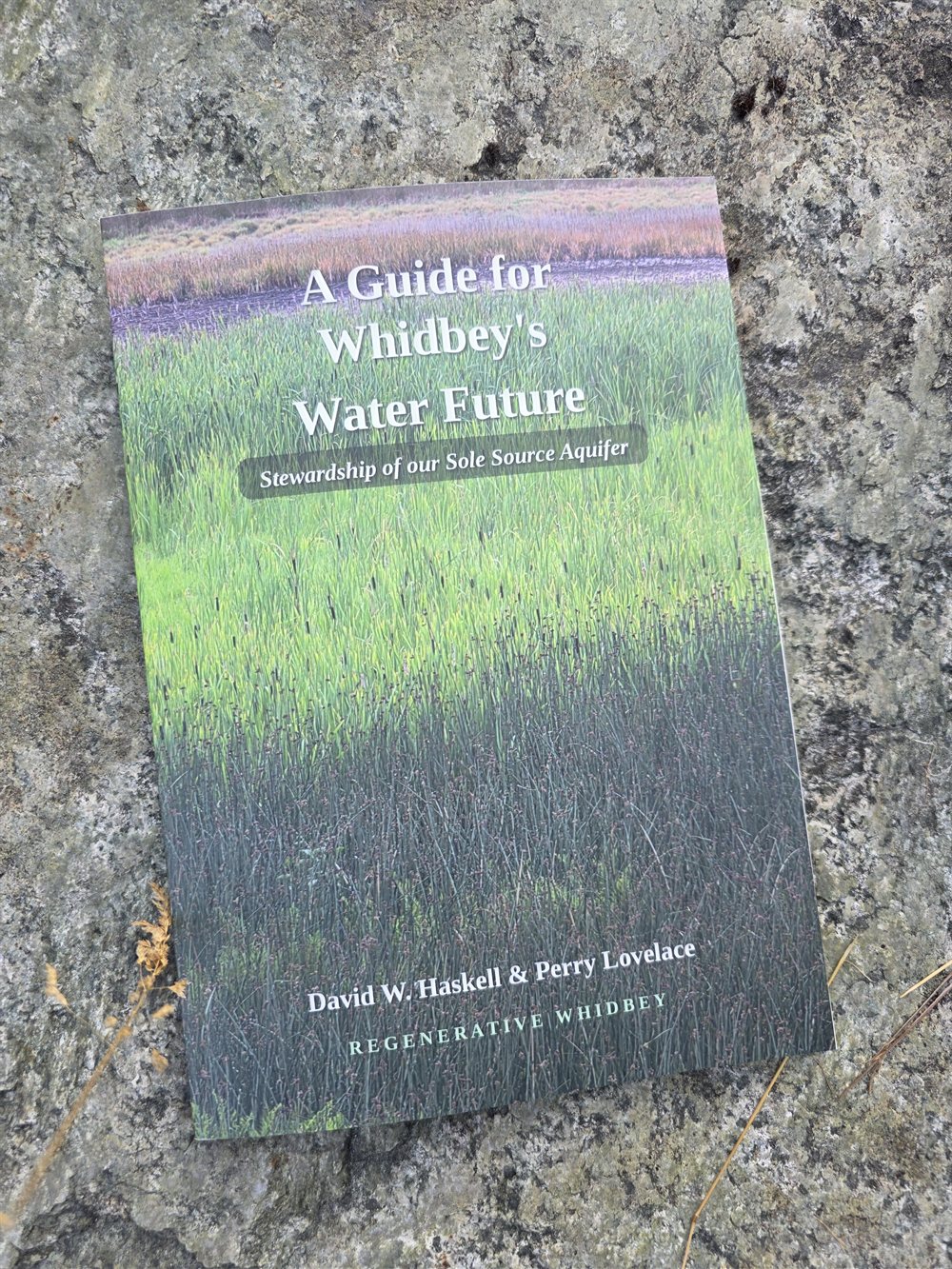
The printed guide A Guide for Whidbey’s Water Future, resting on a lichen-covered rock

Read the guide

A Guide for
Whidbey’s Water Future

Stewardship of our Sole Source Aquifer

We drink from one aquifer. We share one future. Let’s steward it together. The guide is free to read, and every printed copy is paid for by a donation from someone who wanted one.

A donation of $13 or more brings a printed copy to your door, anywhere in the United States. The PDF is always free.

Our work

Not a standalone nonprofit. A shared container.

Regenerative Whidbey is not a standalone nonprofit, but a shared container for coherence, collaboration, and long-view regeneration.

Whidbey is large enough to model bioregional systems and small enough for deep-hearted engagement. Marine, forest, and prairie ecosystems meet here, alongside Coast Salish heritage, settler communities, and a long regenerative ethos.

Our vision

A bioregional lens on a whole system.

What makes Regenerative Whidbey distinct is our bioregional lens: it weaves our bioregional values into a whole-system approach.

Regenerative Whidbey is about restoring balance, ecological, cultural, and relational, by rooting our lives in place and community.

Our values

Reciprocity, humility, right relationship.

Guided by values of reciprocity, humility, and right relationship, we embrace bioregionalism as a path to resilience, cultural repair, and planetary regeneration.

Now is the time to act, drawing on Indigenous wisdom, grassroots energy, and our unique human scale.

Our unique role

We do not replace the work. We weave it together.

With more than 300 nonprofits and dozens of stewardship groups, the island already knows how to show up. We help create coherence across efforts, from watersheds and climate to composting, restoration, resilience, and regenerative agriculture.

Our Stewardship Council brings experience in ecology, community organizing, systems thinking, Indigenous leadership, climate action, and regenerative practice. Their role is simple: listen deeply, support collaboration, and help the island move forward together.

Everything starts with water

Stewardship of a
Sole Source Aquifer

Our first major initiative: A Guide for Whidbey’s Water Future — Stewardship of our Sole Source Aquifer.

The water systems that served yesterday’s Whidbey were built for a world where water was perceived as limitless. The climate impacted Whidbey of tomorrow requires a new way of thinking that aligns governance with reality and treats the aquifer not as a resource to extract from, but as living ecosystem that needs to be replenished and protected.

15

Sole Source Aquifer Project

Explore the Water Fact Sheets

Fifteen concise briefings to help our community understand the water system we share, and make wiser choices for the island’s future. Read online or download any PDF below.

Download all

01

Understanding the Challenge

Start with the whole system: the limits of a sole source aquifer, a regenerative north star, and the pressures reshaping Whidbey’s water future.

Core Challenges of Whidbey’s Water

A system-wide overview of aquifer limits, saltwater intrusion, contamination, fragmented governance, and incomplete data.

Regenerative Water Principles

A concise, voluntary north star for equitable, whole-system stewardship of Whidbey’s shared water.

Peak Water on Whidbey

Explains where water use, recharge, and water-quality limits begin to constrain growth and ecosystem health.

Whidbey’s Water Market Failure

Examines why fragmented geographic monopolies and consumer lock-in call for public-interest stewardship.

02

Governance and Regulation

Understand how authority is divided today, where coordination stalls, and which pathways could better serve the aquifer as a whole.

Water Governance Challenges

Maps the network of providers, regulators, conveners, co-managers, and knowledge holders, and the bottlenecks between them.

Regulatory Overview

A clear look at the regulatory landscape surrounding Whidbey’s finite aquifer, small systems, and cumulative water use.

A Review of WIWSA

Explores the history, coordinating role, strengths, and present challenges of the Whidbey Island Water Systems Association.

Regenerative Water vs. the Corporate Model

Compares community-centered stewardship with the cost and accountability implications of for-profit water management.

Three Governance Options

A decision-ready comparison of the status quo, a shared-services model, and a Whidbey water public utility district.

03

Water Systems and Security

See the practical realities facing small systems, North Whidbey’s imported supply, and island-wide readiness for earthquakes and other hazards.

Small Systems and Operators Briefing

Details the structural, financial, regulatory, workforce, and infrastructure pressures facing small water systems.

Water Security in Oak Harbor

Examines how reduced North Cascades snowpack could affect the Skagit River supply serving Oak Harbor and NAS Whidbey.

Disaster Vulnerability

Assesses water-system exposure to earthquakes and major hazards, including operational gaps and fragile infrastructure.

04

Data, Geology and Future Risk

Explore the physical foundations of Whidbey’s groundwater and why current, shared information is essential for sound decisions.

The Data Obsolescence Crisis

Makes the case for replacing aging baselines and fragmented monitoring with a current island-wide water picture.

Whidbey Geology

An accessible guide to the glacial deposits, bedrock, freshwater lenses, and boundaries that shape the island’s water supply.

Whidbey Water Data Documents

Catalogs foundational aquifer studies and shows how much of today’s planning still rests on decades-old source material.

01

Water Wisdom
Pool

The Water Wisdom Pool invites you to reflect on the current state of Whidbey’s water and to share your own experiences. Once logged your reflections will be synthesized into a Community View where you can read how your ideas compared to those of your neighbors.

02

In construction

Recharge
Mapping Circles

The Great Seeing, an invitation to community mapping. Whidbey Island drinks from one aquifer, a single, living body of water beneath our feet. Every forest, wetland, prairie, farm, and shoreline plays a role in tending this source. Every steward carries a piece of its story.

And yet, the full picture of how water moves through our island, how it is recharged, protected, and made resilient, remains largely invisible. Regenerative Whidbey is convening a Community Recharge Mapping Program to make that invisible system visible.

One aquifer.

One island.

One shared future.

The bioregional movement

Belonging to Place.
Acting Together.

Every bioregional story begins with a call. For Whidbey, that call arrived through the Regenerate Cascadia Landscape Hub Cultivator Program, an invitation to step into a larger weave of people across the bioregion who are learning how to care for their places in a coordinated, life-honoring way.

In this first phase, Whidbey joined a circle of peers. We listened. We learned. We began to see our island not as an isolated community, but as one living node in a vast Cascadian bioregional tapestry.

This was the awakening, the moment we realized that Whidbey’s regeneration is part of something much larger.

Learn about the Landscape Hub Cultivator Program

The First Offering, the Landscape Showcase. Every landscape needed to introduce itself to the bioregion. Whidbey stepped forward and said: “Here is who we are. Here is our story. Here is what we love and what we long to heal.”

Regenerate Cascadia’s Landscape Showcase was a ceremony of recognition, a way for the eight Landscape Groups to say:

  • These are our watersheds.
  • These are our forests and farms.
  • These are our stewards.
  • These are the threads of care already alive here.

By sharing our story, Whidbey signaled readiness. We said: “We are here. We are committed. We are part of the bioregional family.”

Supporting our practice of becoming a people of place again.

Our invitation

Welcome to
Regenerative Whidbey

Greetings to all who long to belong again, we extend to you an invitation. An invitation that reflects how we strive to be. It’s the good news bad news: we are human, filled with promise and sorrow; yet we found each other in hope of being together in community.

With that intention, you are invited to join us on this journey. If you grab a paddle, we can all move much faster. Moving at the speed of trust.

This is your island.

This is your community.

This is your future.